How Long Does It Take To Get Used To Braces? A Week-by-Week Breakdown

The adjustment timeline varies by what you are adjusting to. Physical soreness, speech changes, eating habits, and the cleaning routine each follow their own schedule. Guidance from Dr. Jacob at Smile City Orthodontics, Sunnyvale, TX.

How long does it take to get used to braces? Most patients feel noticeably more comfortable within one to two weeks of getting braces. The initial soreness typically peaks around days two and three, then gradually subsides over the following week. Speech and eating adjustments usually follow a similar timeline. The cleaning routine takes the longest to feel natural, often three to four weeks before the tools and technique become second nature. After each adjustment appointment, a shorter version of the initial soreness tends to return for one to three days.

The most common question in the days after getting braces is some version of: “Is this normal?” Almost always, the answer is yes. The soreness, the pressure, the unfamiliar feeling against the inside of the lips, all of it is a predictable response to a new fixed appliance and resolves on a schedule that is fairly consistent across patients.

At Smile City Orthodontics in Sunnyvale, Dr. Jacob walks every patient through what to expect during the adjustment period at the bonding appointment, because knowing what is normal makes the first week significantly easier to get through.

The breakdown below follows the same timeline: what happens in the first days, when most of the adjustment is complete, what triggers a setback, and how the experience differs across braces types.

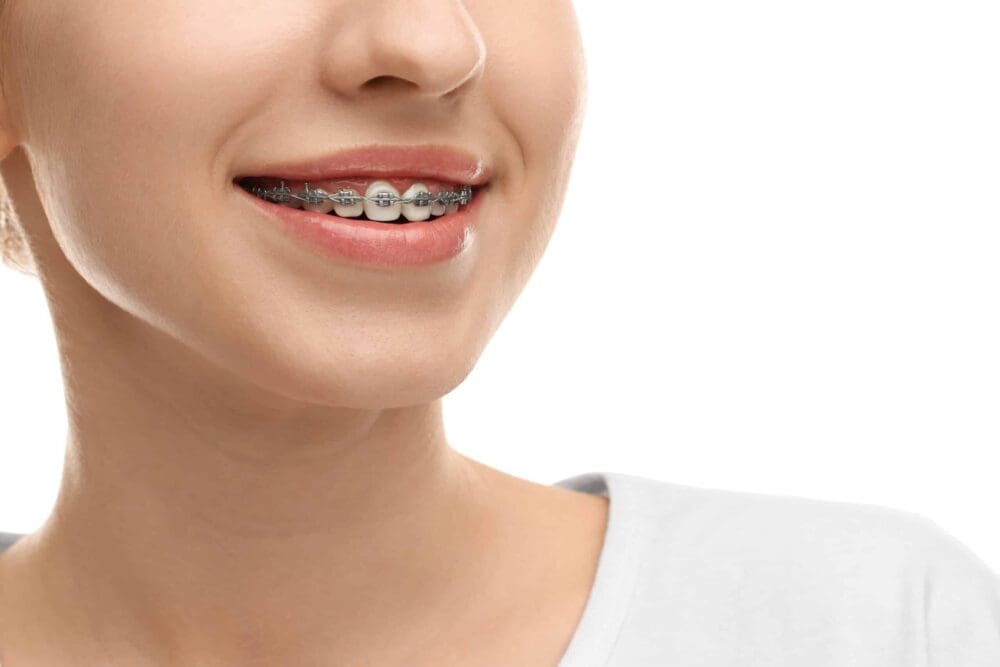
young black woman smiling with metal braces - How Long Does It Take To Get Used To Braces? A Week-by-Week Breakdown in Sunnyvale TX

What “Getting Used to Braces” Actually Covers

Patients often talk about the adjustment period as a single thing, but there are really four distinct adjustments happening on overlapping timelines. Each one resolves at a different pace, which is why some patients feel mostly fine after a week while still struggling with flossing two weeks later.

Physical soreness is the most talked-about part and the most temporary. It comes from the pressure the archwire applies to teeth that are being moved for the first time.

Oral sensitivity — the way the brackets, wires, and bands feel against the inside of the cheeks, lips, and tongue – is separate from soreness and resolves through gradual adaptation of the soft tissue.

Functional adjustments cover how braces affect eating and speaking. Both are disrupted early and return to normal quickly for most patients.

Habit adjustments — the new brushing, flossing, and food-choice routines that braces require – take the longest to internalize because they represent genuinely new behaviors rather than physical adaptation.

Understanding which adjustment you are in makes it much easier to know whether what you are feeling is on track or worth mentioning to the orthodontist.

The Core Distinction: Physical Adaptation vs Habit Building

This matters because the two types of adjustment respond to very different things.

Physical adaptation happens passively. The teeth, soft tissue, and jaw muscles adjust to the presence of the appliance whether the patient actively does anything or not. Eating soft foods helps, orthodontic wax helps, and over-the-counter pain relief helps manage the discomfort in the meantime — but the body is doing the work regardless. Most of the physical adjustment is complete within one to two weeks.

Habit building requires deliberate repetition. Learning to use a floss threader, remembering to brush after meals, avoiding the foods that get stuck in brackets — none of this happens automatically. It requires conscious effort for several weeks before it becomes routine. Patients who expect the habit side of the adjustment to feel natural immediately are usually the ones who find the early weeks most frustrating.

The practical takeaway is that getting through the physical adjustment period requires mostly patience, while getting through the habit adjustment requires mostly intentionality.

Days 1 to 3: What to Expect Right After Bonding

The appointment itself is not painful. Brackets are bonded to clean, dry teeth using a bonding resin, and an archwire is threaded through. The process takes one to two hours and involves no drilling, injections, or procedures that break tissue.

What follows in the next few hours is a different story. As the archwire begins applying pressure, the teeth start to feel it. By the end of the first day, most patients notice a dull ache across the front teeth. This is the bone and periodontal ligament beginning to respond to the new force, which is exactly what is supposed to happen.

The inside of the cheeks and lips may also feel raw where the new brackets make contact. This is not injury; it is the soft tissue encountering a new surface it has not built up tolerance against yet.

What helps:

  • Soft foods for the first several days: yogurt, smoothies, mashed potatoes, scrambled eggs, soups, pasta. Nothing that requires heavy chewing or biting with the front teeth.
  • Over-the-counter pain relievers (ibuprofen or acetaminophen, per the packet instructions) taken before the soreness peaks manage most discomfort effectively.
  • Orthodontic wax pressed onto any bracket or wire that is irritating the cheek or lip provides immediate relief for soft tissue soreness. Dr. Jacob provides wax at the bonding appointment.
  • Rinsing with warm salt water soothes irritated tissue and is safe to use as often as needed.

Days 4 to 7: The Soreness Peaks, Then Begins to Ease

For most patients, the second and third day are the worst. The pressure from the archwire has built up to its full initial level, and the soft tissue irritation from the brackets is at its highest before the cheek and lip tissue has adapted.

By day four or five, most patients notice improvement. The teeth are still tender to bite pressure — this is normal — but the constant background ache begins to fade. Chewing becomes less uncomfortable as the days progress.

The soft tissue usually takes a few extra days beyond the tooth soreness. The inside of the cheeks develops a small amount of callus over the contact points with the brackets, which is what makes brackets feel like a normal part of the mouth rather than a foreign object by the end of the first week or into the second.

Continuing with softer foods through the end of the first week is still worthwhile even as the soreness improves. Brackets and archwires are strong, but the bonding is most secure once the resin has fully settled over the first few days.

Weeks 2 to 4: The Adjustment Becomes Normal

By the start of the second week, the majority of patients report that the braces have stopped feeling like a constant presence. The brackets and wires are still there, but they no longer register as discomfort in the background.

Most patients have returned to a fairly normal diet by the end of week two, with the exception of the specific foods that should be avoided throughout treatment (sticky, hard, or chewy items). Chewing with the back teeth is comfortable; biting with the front teeth into hard foods is still best avoided.

Speech changes, if present, typically resolve during this window. The tongue adjusts its positioning around the brackets and wires, and sounds that felt unfamiliar in the first week — often “s” and “t” sounds — return to normal. Some patients never notice a speech change at all; others find it takes closer to three or four weeks. Reading aloud or talking regularly speeds the adjustment.

The cleaning routine is still being established during weeks two and four for most patients. The tools are familiar by this point, but the specific technique — angling the brush correctly, threading floss under the wire — is still requiring conscious thought rather than being automatic. This is normal and continues to become easier with repetition.

Adjustment Timeline at a Glance

Here’s what to expect at each stage of your orthodontic adjustment journey.

What you’re adjusting toTypical timelineWhat helps
Initial tooth sorenessPeaks days 2 to 3; mostly resolved by day 7Soft diet, OTC pain relief, warm salt water rinse
Bracket irritation on cheeks and lipsBegins improving by day 4 to 5; resolved by day 10 to 14Orthodontic wax on specific brackets, soft food diet
Eating normally againBack to most foods by week 2; restricted foods remain off-limits throughoutStarting with soft foods; reintroducing chewier textures gradually
Speech changesResolved for most patients within 1 to 3 weeksReading aloud, normal daily conversation
Cleaning routine feeling natural3 to 4 weeks before technique feels automaticDaily repetition; correct tools from the start
Post-adjustment visit soreness1 to 3 days after each visit throughout treatmentSame management as the first week, shorter duration

What Makes Some Patients Adjust Faster or Slower

Age plays a modest role. Younger patients tend to adapt physically faster because their tissues are more resilient and their bone responds more readily to the new pressure. Adults generally have a very comparable adjustment, though some report the initial soft tissue irritation lasting slightly longer.

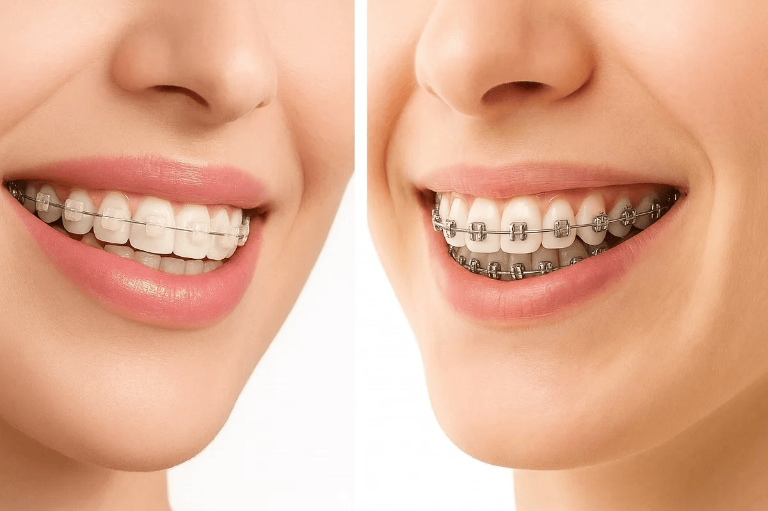
Braces type changes the character of the adjustment. Metal braces have smoother, lower-profile brackets in modern designs, but ceramic brackets can have slightly sharper edges in some configurations. Self-ligating brackets eliminate the elastic ties that hold the wire and often feel smoother in the mouth. For patients who are particularly concerned about initial irritation, discussing bracket options with Dr. Jacob at the consultation is worthwhile.

Attitude and preparation matter more than most patients expect. Patients who understand in advance that days two and three will be uncomfortable and who have soft foods ready go into those days with a plan. Patients who are blindsided by the soreness tend to experience it as more distressing than those who expected it, even when the physical experience is identical.

Compliance with post-bonding care affects how quickly the most uncomfortable phase passes. Patients who manage pain proactively, eat soft foods consistently in the first week, and use wax on irritating brackets tend to have a shorter and less disruptive initial adjustment than patients who try to eat normally from day one or skip pain management.

What Happens After Each Adjustment Appointment

Getting used to braces is not a one-time event. Every four to six weeks, the archwire is adjusted or replaced to continue the planned tooth movement. Each adjustment applies new pressure to teeth that have shifted since the last visit, which triggers a mini-version of the initial adjustment period.

Post-adjustment soreness is typically milder than the first bonding and shorter in duration, usually one to three days. The soft tissue does not need to re-adapt since the brackets are already there. Most patients find that by their third or fourth adjustment visit, the post-visit soreness has reduced to barely noticeable pressure for a day.

Managing it the same way as the first week — soft foods for a day or two, over-the-counter pain relief if needed — makes the regular adjustment appointments much more comfortable over the course of treatment.

What Only a Consultation Can Determine

The adjustment timeline above applies generally across most braces cases, but two things are worth establishing at a consultation before treatment starts.

The first is which braces type fits the case. Metal braces, ceramic braces, and self-ligating systems each have different profiles in the mouth and may have different initial irritation patterns. Dr. Jacob reviews the clinical requirements of each case and discusses aesthetic and comfort preferences at the consultation so the right appliance choice is made before treatment starts rather than after.

The second is whether there are case-specific factors that might extend or modify the adjustment period. A patient who has had significant jaw or muscle sensitivity before treatment may find the initial pressure harder to manage. A patient undergoing a more complex bite correction may have additional appliances alongside braces that require their own adjustment. Those factors are part of the treatment planning conversation at Smile City Orthodontics, not afterthoughts.

How Smile City Orthodontics Supports the Adjustment Period

Dr. Jacob covers what to expect during the adjustment period at every bonding appointment. Patients leave with orthodontic wax, specific soft-food guidance for the first week, and clear instructions for when to call the office versus when to wait out normal soreness.

Smile City Orthodontics offers emergency appointments for appliance issues — a loose bracket, a wire poking the cheek, any hardware problem that cannot wait until the scheduled visit. The practice can be reached by call or text at (214) 663-9144, and same-day appointments are available for urgent care needs.

At each adjustment visit, Dr. Jacob checks soft tissue health, bracket condition, and whether the patient is managing the cleaning routine effectively. The digital scanning technology used at every visit gives a detailed enough picture to catch early plaque accumulation or gum issues before they become a larger problem.

Insurance accepted at Smile City Orthodontics includes Delta Dental, Blue Cross Blue Shield, Aetna, Guardian, MetLife, United Healthcare, G.E.H.A, Careington, and Ameritas. Flexible payment plans with 0% APR financing are available, and the team reviews cost and financing options at the consultation before treatment starts.

Serving Sunnyvale Braces Patients Across the Region

Smile City Orthodontics is located at 180 S Collins Rd, Suite 200, Sunnyvale, TX 75182, just off Highway 80 and approximately 20 minutes from Downtown Dallas. The practice sees braces patients from Sunnyvale and the surrounding communities of Mesquite, Garland, Rowlett, Rockwall, Wylie, and Murphy.

The adjustment timeline described in this guide applies equally to patients from every part of the area. Metal brackets, ceramic brackets, and the adjustment process that follows bonding are the same regardless of where the patient lives. What varies is the specific treatment plan and braces type recommended for each patient’s clinical situation, which is what the consultation addresses.

Common Questions About Getting Used to Braces

Is it normal for braces to hurt so much the first week?

Yes, within a range. Significant soreness in days two and three is entirely normal and expected. The pressure from the archwire is working, and the teeth, bone, and periodontal ligament are all responding to forces they have not experienced before. What is less typical is severe pain that does not respond at all to over-the-counter pain relief, sharp stabbing pain rather than dull pressure, or pain that is getting meaningfully worse past day four or five rather than better. Those situations are worth calling the office about.

Can I go to school or work the day after getting braces?

Yes. Most patients attend school or work normally the day after bonding. The soreness is manageable with over-the-counter pain relief, and the adjustment does not typically impair function to the point of needing to stay home. Having soft foods available during the day helps significantly. The most important practical adjustment for the first few days is avoiding any food that requires hard biting or heavy chewing.

Will braces affect my speech permanently?

No. Speech changes from braces are always temporary and resolve as the tongue and lips adapt to the new appliance profile. Most patients find that any speech change resolves within one to three weeks. The best way to speed the adaptation is simply to talk normally rather than compensating by changing how you form certain sounds, since compensation tends to make the adjustment period longer.

Do ceramic braces feel different from metal during the adjustment?

The adjustment period is similar for both, since the primary source of soreness is archwire pressure rather than the bracket material itself. Some patients find ceramic brackets slightly smoother on the inner lip surface; others notice no difference. The aesthetic appearance is the most meaningful practical difference between the two during daily wear. Dr. Jacob can walk through the specific bracket options available for your case at the consultation.

How do I know if something is wrong versus just normal adjustment soreness?

Normal adjustment soreness is a dull, generalized pressure or ache that is worst around days two and three and improves consistently from there. It affects the teeth broadly rather than one specific point, and it responds to over-the-counter pain relief. Signs that are worth calling the office about include a wire that has slipped and is poking the cheek or the back of the mouth, a bracket that has come loose or feels like it is moving on the tooth, pain that is localized sharply to one tooth rather than broadly distributed, or discomfort that is not improving after day five.

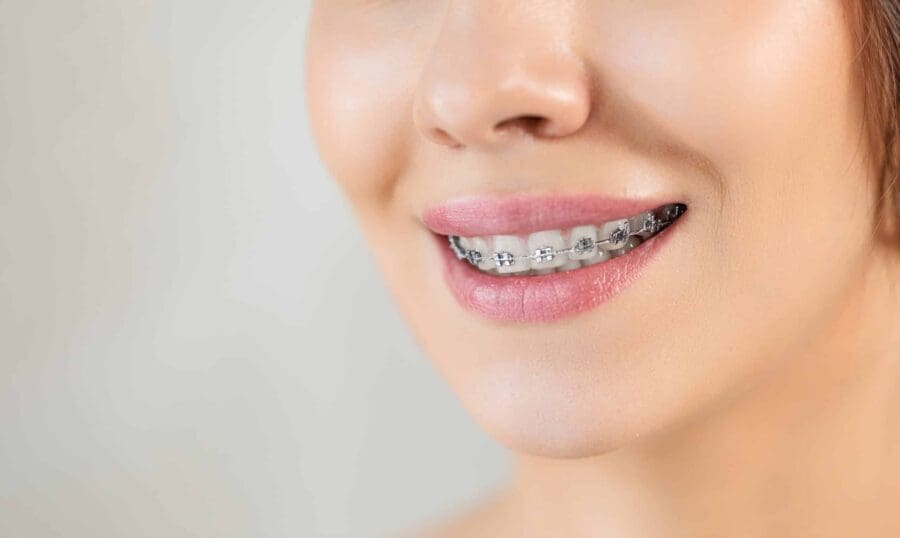
young middle east girl with metal braces smiling happy - How Long Does It Take To Get Used To Braces? A Week-by-Week Breakdown in Sunnyvale TX

Start Braces With a Clear Plan at a Free Consultation

Smile City Orthodontics offers free consultations in Sunnyvale, TX, where Dr. Jacob uses 3D digital scanning and CBCT imaging to build your personalized treatment plan. Same-day starts are available, with flexible 0% APR financing options reviewed at the appointment.

Schedule Your Free Consultation

How to Clean Braces: The Routine That Actually Protects Your Teeth

The right tools matter, but technique and consistency matter more. A step-by-step guide from Dr. Jacob at Smile City Orthodontics, Sunnyvale, TX.

How to clean braces properly starts with understanding that braces do not cause cavities on their own, but they create dozens of new surfaces for plaque and food to collect where a regular toothbrush cannot reach. Patients who clean well throughout treatment finish with healthy enamel. Patients who clean poorly can develop white spots, early decay, or gum problems that outlast the braces themselves. The combination that works is an orthodontic toothbrush used at the right angle, a method for getting floss under the archwire, and a fluoride rinse at the end of the day. Doing all three consistently is more important than which specific products are used.

Most patients who get braces focus on the end result: straight teeth, a confident smile. What keeps that result looking the way it should is what happens twice a day for the next 18 to 24 months while the brackets are on.

At Smile City Orthodontics in Sunnyvale, Dr. Jacob reviews cleaning technique with every patient at the bonding appointment, using digital imaging to show exactly where plaque tends to accumulate around brackets before it becomes a problem.

The guide below covers the same ground: why cleaning is harder with braces, which tools do the job, the technique that reaches every surface, and the daily routine that makes it manageable rather than exhausting.

attractive smiling bearded man with clear braces - How to Clean Braces: The Routine That Actually Protects Your Teeth in Sunnyvale TX

Why Cleaning Braces Is Harder Than It Looks

A tooth without braces has a smooth, curved surface that a toothbrush can sweep relatively efficiently. A tooth with a bracket has four additional edges around the bracket itself, a narrow channel between the bracket and the gumline, spaces under and beside the archwire, and the contact points between brackets where the wire connects. Every one of those spaces traps food and allows plaque to form undisturbed if the brush does not reach it.

The biological risk is real. Plaque that sits against the enamel for extended periods produces acid that demineralizes the tooth surface. Around brackets, this shows up as white spot lesions: chalky, dull patches that appear when the brackets come off and the enamel underneath has been weakened. White spots are permanent. They can be managed cosmetically but they cannot be reversed, which is why prevention during treatment matters far more than any repair afterward.

Gum health is the other side of the same problem. Plaque that builds up along the gumline causes inflammation, swelling, and in chronic cases recession and bone loss. Swollen gums around brackets are not just uncomfortable; they make adjustments harder and, if they persist, can affect the result. Good cleaning is not optional hygiene advice. It is a clinical requirement for the treatment working as planned.

The Two Things That Determine Whether Cleaning Works

Patients who struggle with braces hygiene almost always have a problem in one of two areas, not both.

The first is tools. Using a standard flat toothbrush on braces, without any floss or interproximal brush to reach under the wire, leaves significant areas uncleaned regardless of how long or carefully the brushing happens. The brush geometry simply cannot reach certain surfaces. Buying one or two additional tools solves this.

The second is angle and pressure. Many patients brush past the brackets rather than into them, moving the brush across the front face of the brackets in broad strokes that feel thorough but miss the margins where plaque actually accumulates. The technique section below addresses this specifically.

Both problems are fixable with a short demonstration. Dr. Jacob reviews cleaning technique with every patient at the bonding appointment so that the right habit is established from day one rather than corrected at a six-week check when early plaque signs are already visible.

The Tools Worth Having

You do not need a large collection of products. You need a small set of tools that each cover a surface the others cannot reach.

An orthodontic toothbrush or soft-bristle brush with a compact head. Some patients prefer a brush specifically designed for braces (often with a V-shaped bristle trim that brackets fit into); others do well with any soft-bristle brush with a compact head that can maneuver around individual brackets. Either works. What matters is that the bristles are soft enough not to damage the enamel or gum tissue and that the head is small enough to work around each bracket individually.

An electric toothbrush is a practical upgrade for patients who struggle with manual brushing. The oscillating or sonic motion does some of the work passively, and many electric brush heads are designed to reach the bracket margins well. The same angle and coverage rules apply regardless of whether the brush is manual or powered.

A floss threader, orthodontic floss (Superfloss), or a water flosser. All three serve the same purpose: getting cleaning action under the archwire and between teeth. A floss threader works with regular floss and takes some practice but adds no cost. Superfloss has a stiffened end that threads under the wire more easily and a spongy section that cleans the bracket contact area. A water flosser uses a pulsing stream of water and is the fastest method once the habit is established. Any of the three is far better than skipping interproximal cleaning entirely.

Interdental (proxy) brushes. These small cone- or cylinder-shaped brushes fit under the archwire and clean the space between the wire and the tooth surface, an area a toothbrush typically cannot reach. They are particularly useful for patients with larger spaces between brackets, and for clearing food that gets packed in around the wire after meals.

A fluoride toothpaste and fluoride mouthwash. Fluoride actively strengthens enamel and reduces the risk of white spot formation under and around brackets. Using a fluoride toothpaste for brushing and a fluoride rinse as the last step before bed adds a protective layer that mechanical cleaning alone does not provide. Alcohol-free rinse formulas are preferable since they are gentler on the soft tissue around brackets.

Step-by-Step Brushing Technique

The goal is not speed. It is making sure every surface around every bracket gets covered in the two to three minutes a session takes.

Step 1: Rinse first. A quick water rinse before brushing loosens surface food and makes it easier to see what you are working with.

Step 2: Angle the brush at 45 degrees toward the gumline. Start at the gumline, not at the bracket. Short circular or vibrating strokes at a 45-degree angle to the tooth surface clean the gum margin where plaque most commonly causes early inflammation. Work across the entire arch before moving to the next step.

Step 3: Brush above the bracket. Angle the brush so the bristles press slightly under the top edge of each bracket. The gap between the bracket’s upper edge and the tooth above it accumulates plaque that a flat brushing motion never reaches. Work along the arch tooth by tooth.

Step 4: Brush below the bracket. Same approach at the lower edge of each bracket. Angle the bristles into the space between the bracket’s lower edge and the gumline below it.

Step 5: Brush the front face of the brackets. This is the area most patients only clean. It is also the least important surface for decay prevention, though it matters for keeping the brackets visible and clean. Gentle circular strokes across the front faces of the brackets finishes this pass.

Step 6: Clean the chewing surfaces and the backs of the teeth. Standard brushing technique for these surfaces. The bracket hardware does not extend to the back surfaces or the biting surfaces of the molars, so these areas respond to normal brushing once the front and sides are covered.

Step 7: Spit, do not rinse. Leaving the fluoride toothpaste residue on the teeth for a few minutes before rinsing maximizes the fluoride contact time with the enamel.

How to Floss With Braces

This is the step most patients skip because it is genuinely more difficult with braces than without. The wire blocks the path floss normally takes between teeth, so threading it through takes extra effort. Once the technique is routine, it adds about two to three minutes to the cleaning session.

Floss threader method. Thread a length of regular floss through the loop of the threader. Use the stiffened end of the threader to guide the floss under the archwire between two teeth. Once through, hold both ends of the floss and slide it up and down the side of each adjacent tooth to the gumline, then pull it out and rethread for the next space. This works with any standard floss and is low cost.

Superfloss method. Superfloss has a stiffened tip built in, so no separate threader is needed. The stiffened end threads under the wire; the spongy middle section cleans the bracket contact area; and the regular floss section cleans the normal interproximal surfaces. It is faster than the threader for many patients.

Water flosser method. Fill the reservoir, set the pressure to a comfortable level (low is a good starting point for new users around brackets), and direct the stream between each pair of teeth and along the gumline. It is the fastest method once the habit is established. It does not fully replace mechanical flossing for all patients, but for most braces patients it is an effective and sustainable option when consistent flossing with a threader has failed.

The best method is whichever one actually gets done every day.

A Practical Daily Routine

Follow this simple routine to keep your teeth and braces clean throughout the day.

TimeWhat to doWhy it matters
MorningBrush with orthodontic toothbrush, 2 minutes; use proxy brush under wireClears overnight plaque accumulation before eating
After every meal or snackQuick brush or at minimum a water rinse; use proxy brush if food is trappedFood left against brackets is what allows plaque to form; removing it quickly breaks the cycle
Before bedBrush for 2 minutes (full technique); floss under the wire with threader, Superfloss, or water flosser; fluoride rinse as the last stepNight is when saliva flow is lowest and the teeth are most vulnerable; the fluoride rinse provides protection through overnight hours

Two full cleaning sessions per day is the minimum. After meals and snacks, a quick brush or rinse reduces the window during which food sits against the brackets, which is when most of the acid exposure happens. The bedtime session is the most important and should always be the most thorough.

What Happens When Cleaning Falls Short

Being direct about this is more useful than avoiding it.

White spot lesions are the most common consequence of poor braces hygiene. They appear as chalky white patches on the enamel surface, usually at the margins of where the brackets sat. They are caused by acid demineralization and are visible immediately when the brackets come off. They are permanent, though treatments like microabrasion or fluoride varnish can partially improve their appearance. Prevention during treatment is the only reliable approach.

Cavities around brackets develop for the same reason: acid from plaque sitting against the enamel in areas the brush did not reach. Cavities during orthodontic treatment can complicate the treatment plan and in some cases require the bracket to be removed, the tooth treated, and the bracket rebonded, adding time to the overall timeline.

Gum inflammation and overgrowth around brackets is a sign that plaque along the gumline is not being cleared. Mild gingivitis during braces is common and resolves when cleaning improves. Persistent inflammation that is not addressed can progress to early periodontitis and in some cases cause the gum tissue to grow up and around the bracket, which interferes with tooth movement and requires trimming before treatment can continue.

Foods That Work Against Your Cleaning Routine

This is not a complete food restriction list but rather the specific categories that cause the most cleaning problems rather than just the most mechanical risk to brackets.

Sticky or chewy foods leave residue packed around brackets and under wires that does not come out with a simple rinse. Caramel, gummy candies, dried fruit, and chewy granola bars are the most common culprits and are worth avoiding for the duration of treatment.

Sugary drinks, including juice and sports drinks, coat every surface of the mouth with sugar that feeds the acid-producing bacteria responsible for white spots. Water is the safe choice. If sugary or acidic drinks are consumed, rinsing with water immediately after reduces the exposure window.

Hard foods that require biting with the front teeth risk bracket damage, which creates gaps and rough surfaces where plaque collects. Corn on the cob, whole apples, and crusty bread are the most common examples. Cutting them into smaller pieces before eating keeps the brackets intact.

How Smile City Orthodontics Supports Patients Through Treatment

Every new braces patient at Smile City Orthodontics receives a cleaning demonstration at the bonding appointment, covering the correct brush angle, technique around brackets, and which interproximal tools are recommended for that patient’s specific arch spacing and treatment plan. Dr. Jacob reviews hygiene progress at every adjustment visit and addresses early plaque or gum signs before they become a larger problem.

The practice uses digital scanning technology at each visit, which provides enough resolution to monitor enamel and gum condition alongside tooth movement. If a patient’s hygiene is falling behind, the conversation happens early enough to course-correct rather than at debond when the damage is already done.

Same-day appointments are available for bracket repairs, and the team can walk through cleaning technique in person if a patient has questions between scheduled visits.

Serving Sunnyvale Braces Patients Across the Area

Smile City Orthodontics is located at 180 S Collins Rd, Suite 200, Sunnyvale, TX and sees braces patients from the surrounding communities, including Mesquite, Garland, Rowlett, Rockwall, Wylie, and Murphy. The office is just off Highway 80, approximately 20 minutes from Downtown Dallas and 15 minutes east of Garland.

The cleaning routine described in this guide applies to every braces patient regardless of location. Metal brackets and ceramic brackets work through the same mechanics and present the same cleaning challenges. The specific tools and technique are what change the outcome, and both are things Dr. Jacob and the team go over with every patient at the start of treatment.

Common Questions About Cleaning Braces

How many times a day should I brush with braces?

At minimum twice a day, with a full technique session in the morning and before bed. Ideally, a quick brush or at least a water rinse after every meal and snack reduces how long food sits against the brackets. The bedtime session is the most important and should always be the most thorough, since saliva flow decreases overnight and the teeth have less natural protection during those hours.

Is a water flosser enough, or do I still need regular floss?

For most braces patients, a water flosser used consistently is effective at reducing interproximal plaque and is a sustainable daily habit. It is not identical to mechanical flossing in the force it applies to the tooth surface, but in practice, a water flosser used every day outperforms traditional flossing that gets skipped because it is too time-consuming. The best option is whichever one you will actually do.

What are white spots, and can they be fixed?

White spot lesions are areas of enamel demineralization that appear as chalky, dull patches, usually visible at the bracket margins after the braces come off. They are caused by acid from plaque sitting against the enamel for extended periods. They are permanent changes to the enamel surface. Treatments like microabrasion, fluoride varnish, or resin infiltration can improve their appearance to varying degrees, but they cannot fully restore the enamel to its original condition. Prevention during treatment is the most reliable approach.

Do electric toothbrushes work better than manual for braces?

For many patients, yes, particularly those who find it hard to maintain the correct manual brush angle consistently. The oscillating or sonic motion of an electric brush does some of the mechanical work passively and tends to clean bracket margins more consistently. The same principles apply regardless: the brush still needs to be angled toward the gumline and into the bracket margins rather than just swept across the front face of the brackets.

My gums bleed when I floss around my braces. Should I stop?

Bleeding gums when flossing is usually a sign of early gingivitis, meaning the gum tissue is inflamed from plaque accumulation at the gumline. Stopping flossing because of the bleeding is the opposite of what helps. Consistent daily flossing reduces the inflammation and the bleeding typically decreases within a week or two as the gums become healthier. If the bleeding is heavy, persistent, or accompanied by significant swelling or pain, mention it at the next appointment so Dr. Jacob can assess whether it needs attention.

cheerful happy young woman blonde hair gesturing thumb while pointing clear braces - How to Clean Braces: The Routine That Actually Protects Your Teeth in Sunnyvale TX

Get Your Braces Started with a Free Consultation in Sunnyvale

Smile City Orthodontics offers free orthodontic consultations in Sunnyvale, TX. Dr. Jacob uses 3D digital scanning and CBCT imaging to build a personalized treatment plan, with same-day starts available and flexible 0% APR financing.

Schedule Your Free Consultation

Braces in Dallas: Here’s What You Should Know

When it comes to achieving a healthy, beautiful smile, braces are one of the most effective solutions available. They work by gradually repositioning your teeth into their correct alignment, improving both the function and aesthetics of your bite. Whether you’re dealing with crowding, spacing issues, or crooked teeth, braces are a tried-and-true orthodontic treatment that has helped millions of people gain confidence in their smiles. At Smile City Orthodontics, we’re here to guide you through every step of the process and ensure you understand all your options to make the best decision for braces in Dallas.

Types of Braces We Offer

At Smile City Orthodontics, we offer two common types of braces in Dallas—metal and ceramic. Each option has unique benefits, so you can choose the one that best fits your lifestyle and preferences.

Metal Braces  

Metal braces are the traditional option that many people are familiar with. These are made from high-quality stainless steel and consist of metal brackets and wires. Metal braces are highly durable and effective in correcting alignment issues. They are also cost-effective, making them a popular choice for patients of all ages. Over the years, advancements have made metal braces smaller and more comfortable than they used to be. Plus, you can even customize them with colorful rubber bands to add a fun, personal touch!

Ceramic Braces  

For those looking for a more subtle solution, ceramic braces may be the ideal choice. They function similarly to metal braces but use brackets that are either clear or tooth-colored, blending in with your natural teeth. Ceramic braces are a more discreet option, making them especially popular among teens and adults who wish to maintain a more professional or aesthetic appearance during treatment. While they may require a little extra care to avoid staining, they are a highly effective and visually appealing orthodontic solution.

Why Get Braces?

Braces aren’t just about aesthetics—they’re an essential investment in your overall oral health. Misaligned teeth can lead to a variety of dental problems, including difficulty cleaning your teeth properly, which increases the risk of tooth decay and gum disease. A poorly aligned bite can also contribute to issues like jaw pain, uneven wear on teeth, and even speech difficulties.

For children and teenagers, getting braces early—while their teeth and jaws are still developing—offers the best chance for quick and effective treatment. Early intervention can often prevent more serious issues down the road, shortening treatment time and improving outcomes. However, braces are not just for kids. Adults can also benefit from orthodontic treatment, achieving straighter teeth and a healthier smile at any age.

Caring for Your Braces

Maintaining your braces takes a little extra effort, but it’s well worth it for the long-term benefits of a healthy, beautiful smile. Here are some tips for keeping your braces in excellent condition throughout your treatment:

  • Brush and floss carefully. Food particles are more likely to get stuck in the brackets and wires, so it’s crucial to brush after every meal and floss daily.
  • Avoid certain foods. Sticky, hard, or crunchy foods can damage your braces. To prevent unwanted repairs, stay away from chewing gum, popcorn, and hard candies.
  • Keep your orthodontic appointments. Regular check-ups are essential to monitor your progress and make necessary adjustments to your braces.
  • Use orthodontic tools. Special tools like interdental brushes and wax can make cleaning and wearing braces more comfortable.

Following these steps will help ensure you stay on track with your treatment plan and achieve your desired results as quickly as possible.

Why Choose Smile City Orthodontics for Braces in Dallas?

At Smile City Orthodontics in Dallas, we pride ourselves on providing exceptional care tailored to each patient’s unique needs. Led by Dr. Jacob and our team of friendly professionals, we combine advanced orthodontic techniques with a personalized approach to give you the best possible experience. Whether you’re looking for metal braces or ceramic braces or have questions about orthodontic treatment as an adult, we’re here to help.
Don’t wait any longer to get the smile you’ve always wanted. Contact Smile City Orthodontics today to schedule your consultation and take the first step toward a healthier, more confident you!

Transforming Smiles with Braces in Mesquite, TX: Smile City Orthodontics

At Smile City Orthodontics, led by Dr. Jacob, patients in the Mesquite area have access to expert care and personalized treatment plans. Smile City Orthodontics in Sunnyvale helps our neighbors in Mesquite find high-quality braces that meet their needs. Here’s everything you need to know about braces in Mesquite and why Smile City Orthodontics is the right place to begin your journey toward a better smile.

For anyone considering orthodontic treatment, braces are:

  • A time-tested and effective solution for straightening teeth.
  • Correcting bite issues.
  • Creating a beautiful, healthy smile.

Why Choose Braces?

Traditional braces in Mesquite are a popular and versatile orthodontic solution that addresses various dental issues. Made from high-quality materials, braces consist of metal or ceramic brackets and wires that gradually move teeth into their ideal positions. Braces are particularly effective for treating:

  • Crowded Teeth: When teeth overlap due to lack of space, braces can create more room by repositioning teeth over time.
  • Gaps Between Teeth: Spaces or gaps can detract from the aesthetics of a smile and potentially lead to gum health issues. Braces work to close these gaps.
  • Overbite, Underbite, and Crossbite: Bite issues can lead to discomfort, uneven tooth wear, and jaw pain. Braces help align the jaws for a balanced bite.
  • Misaligned Teeth: Braces in Mesquite can straighten teeth, enhancing the look of your smile and making it easier to clean and maintain.

Dr. Jacob at Smile City Orthodontics provides customized braces in Mesquite to help you achieve a functional and beautiful smile.

Types of Braces Offered at Smile City Orthodontics

At Smile City Orthodontics, we understand that each patient has unique needs and preferences when it comes to orthodontic treatment. To accommodate different lifestyles and goals, Dr. Jacob offers several types of braces:

Traditional Metal Braces

Metal braces are the most common type and are highly effective for complex dental issues. Today’s metal braces are smaller, lighter, and more comfortable. Metal braces allow for precise adjustments to achieve the desired alignment, making them a reliable choice for many patients.

Ceramic Braces

Ceramic braces are a fantastic alternative for patients looking for a more discreet option. These braces use clear or tooth-colored brackets that blend in with your natural teeth, making them less noticeable. Ceramic braces are especially popular among teenagers and adults who want a subtler appearance while receiving treatment.

By offering various braces in Mesquite, Dr. Jacob at Smile City Orthodontics ensures that every patient can find the right option to fit their lifestyle and treatment goals.

The Braces Process at Smile City Orthodontics

Embarking toward a straighter smile with braces in Mesquite is an exciting step. Here’s what you can expect during the process with Dr. Jacob at Smile City Orthodontics:

Step 1: Initial Consultation

The first step is a comprehensive consultation with Dr. Jacob, during which he will examine your teeth, gums, and jaw alignment. Advanced imaging creates a precise treatment plan tailored to your specific needs. This consultation is an excellent opportunity to ask questions and learn more about what to expect with braces.

Step 2: Placing the Braces

Once we finalize your treatment plan, Dr. Jacob will place the braces. This process involves bonding brackets to each tooth and thread a wire through them, gradually moving your teeth into alignment. For patients who choose metal or ceramic braces, colored or clear elastic bands secure the wires.

Step 3: Adjustments

You’ll visit Smile City Orthodontics for adjustments every few weeks. Dr. Jacob will tighten the wires to continue guiding your teeth into their ideal positions. These appointments are essential to ensure steady progress throughout the treatment.

Step 4: Final Removal and Retainer

Once your teeth have reached optimal alignment, Dr. Jacob will remove your braces, revealing your new smile. To help maintain the results, we provide a custom retainer, which you’ll need to wear as instructed.

Benefits of Braces in Mesquite

Choosing braces offers several benefits that go beyond just aesthetics. Here’s why investing in braces with Smile City Orthodontics is a smart choice:

  • Improved Oral Health: Straighter teeth are easier to clean, reducing the risk of tooth decay, gum disease, and plaque buildup.
  • Enhanced Confidence: A beautiful smile boosts self-confidence and can make a positive impression on those around you.
  • Better Functionality: Correcting bite and alignment issues helps prevent strain on the jaw and allows for comfortable chewing and speaking.

Smile City Orthodontics proudly serves Mesquite, offering expert orthodontic care and high-quality braces to give you results.

Why Choose Smile City Orthodontics for Braces in Mesquite?

Dr. Jacob and the team at Smile City Orthodontics are passionate about providing outstanding orthodontic care with a focus on patient comfort and satisfaction. Our state-of-the-art facility is equipped with the latest technology to make the braces process as effective and efficient as possible. We understand that orthodontic treatment is a journey, and we’re here to guide you with compassion and expertise.

Ready to Begin Your Journey to a Straighter Smile?

If you’re considering braces in Mesquite, Dr. Jacob at Smile City Orthodontics in Sunnyvale is here to help you achieve a healthy, beautiful smile. Our team is committed to providing personalized care and expert treatment for each patient. Please schedule a consultation with us today to learn more about how braces can transform your smile and enhance your quality of life.

With Smile City Orthodontics, you’re in trusted hands on your journey to a confident smile.

What to Expect During Your First Week with Braces in Mesquite

Getting braces in Mesquite is an exciting step toward achieving a beautiful, straight smile. However, the first week with braces can be a significant adjustment period as your mouth gets used to the new hardware. For patients at Smile City Orthodontics in Mesquite, Dr. Jacob and his team make this transition as smooth as possible. This blog post will cover what you can expect during your first week with braces and provide tips to help you manage the initial discomfort and challenges.

Initial Fitting and Adjustments

When you first get your braces, Dr. Jacob will carefully place the brackets on your teeth and connect them with a wire. This process typically takes about 1-2 hours and is painless. After the braces are in place, you might feel some pressure as the wires apply gentle force to move your teeth into alignment. During the first few days, it’s normal to experience tightness or soreness in your teeth and gums.

Discomfort and Soreness

The most common experience during the first week with braces is discomfort. Your mouth is adjusting to the new appliances, and your teeth are starting to move. You may feel soreness in your teeth and gums, especially when biting down or chewing. Over-the-counter pain relievers like ibuprofen or acetaminophen can help alleviate this discomfort. Additionally, Dr. Jacob may provide orthodontic wax to cover any brackets or wires irritating your cheeks or lips.

Eating with Braces

Eating with braces can be challenging at first. During the initial week, it’s best to stick to soft foods that don’t require much chewing. Some good options include:

  • Yogurt
  • Mashed potatoes
  • Soup
  • Applesauce
  • Smoothies
  • Scrambled eggs

Avoid hard, crunchy, or sticky foods that can damage or get stuck in your braces. As you get used to eating with braces, you’ll learn which foods are easier to manage and how to chew more carefully. According to Dr. Granit Morina, a local orthodontist in Gardner, MA, softer foods like yogurt and mashed potatoes can help reduce discomfort while your mouth adjusts.

Oral Hygiene Routine

Maintaining good oral hygiene is crucial when you have braces. Food particles can easily get trapped in the brackets and wires, leading to plaque buildup and potential cavities. Here are some tips for keeping your teeth clean:

  1. Brush After Every Meal: Use a soft-bristled toothbrush and fluoride toothpaste to clean your teeth and braces. Be sure to brush around each bracket and along the gumline.
  2. Floss Daily: Flossing with braces can be tricky, but tools like floss threaders or orthodontic floss can make it easier. Water flossers are also an excellent option for removing food particles and plaque.
  3. Rinse with Mouthwash: An antimicrobial mouthwash can help reduce bacteria and keep your mouth clean.
  4. Regular Dental Checkups: Continue to see your regular dentist for cleanings and checkups to ensure your teeth and gums stay healthy during orthodontic treatment.

Speech Adjustments

Braces can affect your speech initially. You might notice a slight lisp or difficulty pronouncing certain words. This lisp is normal and usually resolves as your mouth adjusts to the braces. Practicing speaking and reading aloud can help you adapt more quickly.

Dealing with Irritation

Braces can irritate the inside of your cheeks and lips. Orthodontic wax, provided by Dr. Jacob, can be applied to the brackets to create a smooth surface and reduce friction. Rinsing with warm salt water can help soothe the irritation if you develop sores or ulcers.

Follow-Up Appointments

Regular follow-up appointments with Dr. Jacob at Smile City Orthodontics are essential for monitoring your progress and making necessary adjustments. During these visits, the orthodontic team will tighten the wires and check the movement of your teeth. These adjustments can cause additional soreness, but it’s a sign that your treatment is progressing.

Positive Mindset and Patience

Adjusting to braces takes time, and staying positive and patient is important throughout the process. Remember that the discomfort and challenges you face during the first week are temporary and will subside as you get used to your braces. Focus on the long-term benefits and the beautiful smile you’ll have at the end of your treatment.

High-Quality Braces in Mesquite

Your first week with braces in Mesquite at Smile City Orthodontics will be a period of adjustment. Still, you can manage the discomfort and challenges effectively with the right preparation and mindset. Dr. Jacob and his team provide the support and care you need to achieve a healthy, beautiful smile. By following the tips outlined in this blog post, you’ll be well on your way to a successful orthodontic journey. If you have any questions or concerns during your first week with braces, please get in touch with Smile City Orthodontics for assistance.


Contact our office today to learn more about early orthodontic treatment or to schedule an evaluation with Dr. Jacob at Smile City Orthodontics in Sunnyvale. Your child’s future smile will thank you!