
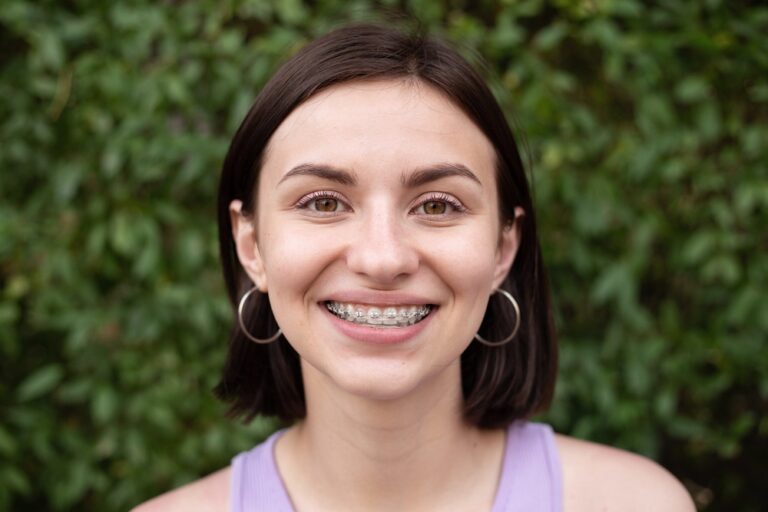
The adjustment timeline varies by what you are adjusting to. Physical soreness, speech changes, eating habits, and the cleaning routine each follow their own schedule. Guidance from Dr. Jacob at Smile City Orthodontics, Sunnyvale, TX.
How long does it take to get used to braces? Most patients feel noticeably more comfortable within one to two weeks of getting braces. The initial soreness typically peaks around days two and three, then gradually subsides over the following week. Speech and eating adjustments usually follow a similar timeline. The cleaning routine takes the longest to feel natural, often three to four weeks before the tools and technique become second nature. After each adjustment appointment, a shorter version of the initial soreness tends to return for one to three days.
The most common question in the days after getting braces is some version of: “Is this normal?” Almost always, the answer is yes. The soreness, the pressure, the unfamiliar feeling against the inside of the lips, all of it is a predictable response to a new fixed appliance and resolves on a schedule that is fairly consistent across patients.
At Smile City Orthodontics in Sunnyvale, Dr. Jacob walks every patient through what to expect during the adjustment period at the bonding appointment, because knowing what is normal makes the first week significantly easier to get through.
The breakdown below follows the same timeline: what happens in the first days, when most of the adjustment is complete, what triggers a setback, and how the experience differs across braces types.

What “Getting Used to Braces” Actually Covers
Patients often talk about the adjustment period as a single thing, but there are really four distinct adjustments happening on overlapping timelines. Each one resolves at a different pace, which is why some patients feel mostly fine after a week while still struggling with flossing two weeks later.
Physical soreness is the most talked-about part and the most temporary. It comes from the pressure the archwire applies to teeth that are being moved for the first time.
Oral sensitivity — the way the brackets, wires, and bands feel against the inside of the cheeks, lips, and tongue – is separate from soreness and resolves through gradual adaptation of the soft tissue.
Functional adjustments cover how braces affect eating and speaking. Both are disrupted early and return to normal quickly for most patients.
Habit adjustments — the new brushing, flossing, and food-choice routines that braces require – take the longest to internalize because they represent genuinely new behaviors rather than physical adaptation.
Understanding which adjustment you are in makes it much easier to know whether what you are feeling is on track or worth mentioning to the orthodontist.
The Core Distinction: Physical Adaptation vs Habit Building
This matters because the two types of adjustment respond to very different things.
Physical adaptation happens passively. The teeth, soft tissue, and jaw muscles adjust to the presence of the appliance whether the patient actively does anything or not. Eating soft foods helps, orthodontic wax helps, and over-the-counter pain relief helps manage the discomfort in the meantime — but the body is doing the work regardless. Most of the physical adjustment is complete within one to two weeks.
Habit building requires deliberate repetition. Learning to use a floss threader, remembering to brush after meals, avoiding the foods that get stuck in brackets — none of this happens automatically. It requires conscious effort for several weeks before it becomes routine. Patients who expect the habit side of the adjustment to feel natural immediately are usually the ones who find the early weeks most frustrating.
The practical takeaway is that getting through the physical adjustment period requires mostly patience, while getting through the habit adjustment requires mostly intentionality.
Days 1 to 3: What to Expect Right After Bonding
The appointment itself is not painful. Brackets are bonded to clean, dry teeth using a bonding resin, and an archwire is threaded through. The process takes one to two hours and involves no drilling, injections, or procedures that break tissue.
What follows in the next few hours is a different story. As the archwire begins applying pressure, the teeth start to feel it. By the end of the first day, most patients notice a dull ache across the front teeth. This is the bone and periodontal ligament beginning to respond to the new force, which is exactly what is supposed to happen.
The inside of the cheeks and lips may also feel raw where the new brackets make contact. This is not injury; it is the soft tissue encountering a new surface it has not built up tolerance against yet.
What helps:
- Soft foods for the first several days: yogurt, smoothies, mashed potatoes, scrambled eggs, soups, pasta. Nothing that requires heavy chewing or biting with the front teeth.
- Over-the-counter pain relievers (ibuprofen or acetaminophen, per the packet instructions) taken before the soreness peaks manage most discomfort effectively.
- Orthodontic wax pressed onto any bracket or wire that is irritating the cheek or lip provides immediate relief for soft tissue soreness. Dr. Jacob provides wax at the bonding appointment.
- Rinsing with warm salt water soothes irritated tissue and is safe to use as often as needed.
Days 4 to 7: The Soreness Peaks, Then Begins to Ease
For most patients, the second and third day are the worst. The pressure from the archwire has built up to its full initial level, and the soft tissue irritation from the brackets is at its highest before the cheek and lip tissue has adapted.
By day four or five, most patients notice improvement. The teeth are still tender to bite pressure — this is normal — but the constant background ache begins to fade. Chewing becomes less uncomfortable as the days progress.
The soft tissue usually takes a few extra days beyond the tooth soreness. The inside of the cheeks develops a small amount of callus over the contact points with the brackets, which is what makes brackets feel like a normal part of the mouth rather than a foreign object by the end of the first week or into the second.
Continuing with softer foods through the end of the first week is still worthwhile even as the soreness improves. Brackets and archwires are strong, but the bonding is most secure once the resin has fully settled over the first few days.
Weeks 2 to 4: The Adjustment Becomes Normal
By the start of the second week, the majority of patients report that the braces have stopped feeling like a constant presence. The brackets and wires are still there, but they no longer register as discomfort in the background.
Most patients have returned to a fairly normal diet by the end of week two, with the exception of the specific foods that should be avoided throughout treatment (sticky, hard, or chewy items). Chewing with the back teeth is comfortable; biting with the front teeth into hard foods is still best avoided.
Speech changes, if present, typically resolve during this window. The tongue adjusts its positioning around the brackets and wires, and sounds that felt unfamiliar in the first week — often “s” and “t” sounds — return to normal. Some patients never notice a speech change at all; others find it takes closer to three or four weeks. Reading aloud or talking regularly speeds the adjustment.
The cleaning routine is still being established during weeks two and four for most patients. The tools are familiar by this point, but the specific technique — angling the brush correctly, threading floss under the wire — is still requiring conscious thought rather than being automatic. This is normal and continues to become easier with repetition.
Adjustment Timeline at a Glance
Here’s what to expect at each stage of your orthodontic adjustment journey.
| What you’re adjusting to | Typical timeline | What helps |
| Initial tooth soreness | Peaks days 2 to 3; mostly resolved by day 7 | Soft diet, OTC pain relief, warm salt water rinse |
| Bracket irritation on cheeks and lips | Begins improving by day 4 to 5; resolved by day 10 to 14 | Orthodontic wax on specific brackets, soft food diet |
| Eating normally again | Back to most foods by week 2; restricted foods remain off-limits throughout | Starting with soft foods; reintroducing chewier textures gradually |
| Speech changes | Resolved for most patients within 1 to 3 weeks | Reading aloud, normal daily conversation |
| Cleaning routine feeling natural | 3 to 4 weeks before technique feels automatic | Daily repetition; correct tools from the start |
| Post-adjustment visit soreness | 1 to 3 days after each visit throughout treatment | Same management as the first week, shorter duration |
What Makes Some Patients Adjust Faster or Slower
Age plays a modest role. Younger patients tend to adapt physically faster because their tissues are more resilient and their bone responds more readily to the new pressure. Adults generally have a very comparable adjustment, though some report the initial soft tissue irritation lasting slightly longer.
Braces type changes the character of the adjustment. Metal braces have smoother, lower-profile brackets in modern designs, but ceramic brackets can have slightly sharper edges in some configurations. Self-ligating brackets eliminate the elastic ties that hold the wire and often feel smoother in the mouth. For patients who are particularly concerned about initial irritation, discussing bracket options with Dr. Jacob at the consultation is worthwhile.
Attitude and preparation matter more than most patients expect. Patients who understand in advance that days two and three will be uncomfortable and who have soft foods ready go into those days with a plan. Patients who are blindsided by the soreness tend to experience it as more distressing than those who expected it, even when the physical experience is identical.
Compliance with post-bonding care affects how quickly the most uncomfortable phase passes. Patients who manage pain proactively, eat soft foods consistently in the first week, and use wax on irritating brackets tend to have a shorter and less disruptive initial adjustment than patients who try to eat normally from day one or skip pain management.
What Happens After Each Adjustment Appointment
Getting used to braces is not a one-time event. Every four to six weeks, the archwire is adjusted or replaced to continue the planned tooth movement. Each adjustment applies new pressure to teeth that have shifted since the last visit, which triggers a mini-version of the initial adjustment period.
Post-adjustment soreness is typically milder than the first bonding and shorter in duration, usually one to three days. The soft tissue does not need to re-adapt since the brackets are already there. Most patients find that by their third or fourth adjustment visit, the post-visit soreness has reduced to barely noticeable pressure for a day.
Managing it the same way as the first week — soft foods for a day or two, over-the-counter pain relief if needed — makes the regular adjustment appointments much more comfortable over the course of treatment.
What Only a Consultation Can Determine
The adjustment timeline above applies generally across most braces cases, but two things are worth establishing at a consultation before treatment starts.
The first is which braces type fits the case. Metal braces, ceramic braces, and self-ligating systems each have different profiles in the mouth and may have different initial irritation patterns. Dr. Jacob reviews the clinical requirements of each case and discusses aesthetic and comfort preferences at the consultation so the right appliance choice is made before treatment starts rather than after.
The second is whether there are case-specific factors that might extend or modify the adjustment period. A patient who has had significant jaw or muscle sensitivity before treatment may find the initial pressure harder to manage. A patient undergoing a more complex bite correction may have additional appliances alongside braces that require their own adjustment. Those factors are part of the treatment planning conversation at Smile City Orthodontics, not afterthoughts.
How Smile City Orthodontics Supports the Adjustment Period
Dr. Jacob covers what to expect during the adjustment period at every bonding appointment. Patients leave with orthodontic wax, specific soft-food guidance for the first week, and clear instructions for when to call the office versus when to wait out normal soreness.
Smile City Orthodontics offers emergency appointments for appliance issues — a loose bracket, a wire poking the cheek, any hardware problem that cannot wait until the scheduled visit. The practice can be reached by call or text at (214) 663-9144, and same-day appointments are available for urgent care needs.
At each adjustment visit, Dr. Jacob checks soft tissue health, bracket condition, and whether the patient is managing the cleaning routine effectively. The digital scanning technology used at every visit gives a detailed enough picture to catch early plaque accumulation or gum issues before they become a larger problem.
Insurance accepted at Smile City Orthodontics includes Delta Dental, Blue Cross Blue Shield, Aetna, Guardian, MetLife, United Healthcare, G.E.H.A, Careington, and Ameritas. Flexible payment plans with 0% APR financing are available, and the team reviews cost and financing options at the consultation before treatment starts.
Serving Sunnyvale Braces Patients Across the Region
Smile City Orthodontics is located at 180 S Collins Rd, Suite 200, Sunnyvale, TX 75182, just off Highway 80 and approximately 20 minutes from Downtown Dallas. The practice sees braces patients from Sunnyvale and the surrounding communities of Mesquite, Garland, Rowlett, Rockwall, Wylie, and Murphy.
The adjustment timeline described in this guide applies equally to patients from every part of the area. Metal brackets, ceramic brackets, and the adjustment process that follows bonding are the same regardless of where the patient lives. What varies is the specific treatment plan and braces type recommended for each patient’s clinical situation, which is what the consultation addresses.
Common Questions About Getting Used to Braces
Is it normal for braces to hurt so much the first week?
Yes, within a range. Significant soreness in days two and three is entirely normal and expected. The pressure from the archwire is working, and the teeth, bone, and periodontal ligament are all responding to forces they have not experienced before. What is less typical is severe pain that does not respond at all to over-the-counter pain relief, sharp stabbing pain rather than dull pressure, or pain that is getting meaningfully worse past day four or five rather than better. Those situations are worth calling the office about.
Can I go to school or work the day after getting braces?
Yes. Most patients attend school or work normally the day after bonding. The soreness is manageable with over-the-counter pain relief, and the adjustment does not typically impair function to the point of needing to stay home. Having soft foods available during the day helps significantly. The most important practical adjustment for the first few days is avoiding any food that requires hard biting or heavy chewing.
Will braces affect my speech permanently?
No. Speech changes from braces are always temporary and resolve as the tongue and lips adapt to the new appliance profile. Most patients find that any speech change resolves within one to three weeks. The best way to speed the adaptation is simply to talk normally rather than compensating by changing how you form certain sounds, since compensation tends to make the adjustment period longer.
Do ceramic braces feel different from metal during the adjustment?
The adjustment period is similar for both, since the primary source of soreness is archwire pressure rather than the bracket material itself. Some patients find ceramic brackets slightly smoother on the inner lip surface; others notice no difference. The aesthetic appearance is the most meaningful practical difference between the two during daily wear. Dr. Jacob can walk through the specific bracket options available for your case at the consultation.
How do I know if something is wrong versus just normal adjustment soreness?
Normal adjustment soreness is a dull, generalized pressure or ache that is worst around days two and three and improves consistently from there. It affects the teeth broadly rather than one specific point, and it responds to over-the-counter pain relief. Signs that are worth calling the office about include a wire that has slipped and is poking the cheek or the back of the mouth, a bracket that has come loose or feels like it is moving on the tooth, pain that is localized sharply to one tooth rather than broadly distributed, or discomfort that is not improving after day five.
Sources. General clinical literature on the biological response to orthodontic force application, soft tissue adaptation to fixed appliances, and typical post-bonding adjustment timelines, described qualitatively. Practice-specific consultation and patient support details from Smile City Orthodontics, Sunnyvale, TX.

Related Reading
- Braces in Sunnyvale, TX
- Metal Braces at Smile City Orthodontics
- Clear Braces at Smile City Orthodontics
- Braces Cost in Sunnyvale, TX
- Invisalign in Sunnyvale, TX
Start Braces With a Clear Plan at a Free Consultation
Smile City Orthodontics offers free consultations in Sunnyvale, TX, where Dr. Jacob uses 3D digital scanning and CBCT imaging to build your personalized treatment plan. Same-day starts are available, with flexible 0% APR financing options reviewed at the appointment.
Schedule Your Free Consultation