
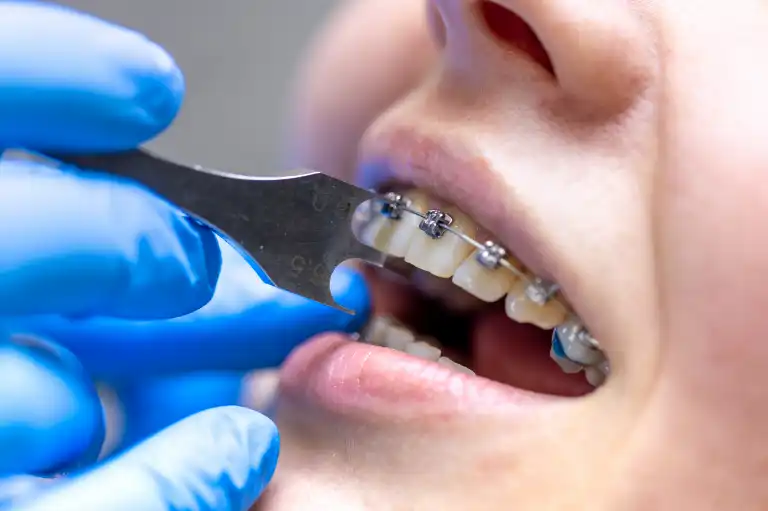
Should I Start Braces Before the End of the Year?
Starting orthodontic treatment before the end of the year may be financially beneficial for some patients, particularly those with unused FSA funds or upcoming changes to their dental insurance.
However, starting braces before December 31 does not automatically increase your orthodontic insurance benefits.
The decision depends on your clinical needs, insurance eligibility, and financial circumstances.
Starting Braces Before December 31 vs. Waiting Until January
| Consideration | Starting before year-end | Starting in the new year |
| Current insurance | May establish eligibility under the current plan | Depends on the new plan’s benefits |
| Orthodontic lifetime maximum | May use available benefits | Usually does not reset under the same plan |
| Unused FSA funds | May help pay eligible expenses before the deadline | Funds may expire without an applicable carryover or grace period |
| HSA funds | Available for eligible expenses | Unused funds generally remain available |
| New insurance coverage | Future payments may be affected by a plan change | New coverage may offer different benefits |
| Waiting periods | Current waiting period must be satisfied | A new waiting period may apply |
| Clinical readiness | Treatment should begin only when appropriate | Waiting may be appropriate depending on the diagnosis |
When Starting Braces Before Year-End May Make Sense
Starting treatment before the end of your plan year may be worth considering if:
- You have unused FSA funds that may expire.
- Your current orthodontic benefits are changing.
- Your employer is switching insurance providers.
- Your child is approaching an orthodontic coverage age limit.
- Your current insurance provides more favorable orthodontic benefits.
- Your orthodontist has determined that you are clinically ready to begin treatment.
When Waiting Until the New Year May Make Sense
Waiting may be appropriate if:
- Your new dental insurance provides better orthodontic coverage.
- You are enrolling in a plan that includes adult orthodontic benefits.
- Your waiting period has not ended.
- You plan to use newly available FSA funds.
- Additional dental treatment is required before starting braces.
- Your orthodontist recommends delaying treatment.
The timing of orthodontic treatment should always be based on clinical recommendations rather than insurance deadlines alone.
Planning ahead? Schedule a complimentary orthodontic consultation at Smile City Orthodontics to review your treatment options and estimated insurance benefits before your plan year ends.
Do FSA Funds Expire at the End of the Year?
Most healthcare FSAs operate under a use-it-or-lose-it rule.
This means unused funds may be forfeited at the end of the applicable plan year unless the employer’s plan provides a permitted carryover or grace period.
For patients considering braces or Invisalign, understanding FSA deadlines may help prevent unused healthcare funds from being lost.
What Is an FSA Grace Period?
An employer’s healthcare FSA plan may provide a grace period of up to two months and 15 days after the plan year ends.
During this period, eligible expenses may be incurred using remaining funds from the previous plan year.
For example, a calendar-year FSA with the maximum permitted grace period may allow eligible expenses through March 15 of the following year.
Not all employers offer a grace period.
What Is an FSA Carryover?
Some healthcare FSA plans allow a limited amount of unused funds to carry over into the following plan year.
For plan years beginning in 2026, the maximum permitted carryover is $680.
For plan years beginning in 2027, the maximum permitted carryover is $700.
Employers may allow a lower amount or may not offer carryover at all.
A healthcare FSA generally cannot offer both a carryover and a grace period for the same plan year.
What Is an FSA Run-Out Period?
An FSA run-out period is the time allowed to submit reimbursement claims for expenses incurred during an eligible coverage period.
A run-out period does not necessarily extend the deadline for incurring new expenses.
Patients should distinguish between:
- The deadline to incur eligible expenses.
- Any applicable grace period.
- The amount eligible for carryover.
- The deadline to submit reimbursement claims.
Confirm all deadlines with your benefits administrator.
Should You Use Your Remaining FSA Funds for Braces Before December 31?
Using remaining FSA funds for qualifying orthodontic expenses may be financially beneficial if the funds would otherwise expire.
Before the end of your plan year, consider the following:
- Review your remaining FSA balance.
- Confirm your plan’s spending deadline.
- Determine whether a carryover or grace period is available.
- Review your orthodontic insurance benefits.
- Schedule an orthodontic consultation.
- Obtain a written treatment and payment estimate.
- Confirm which orthodontic expenses qualify for reimbursement.
- Begin treatment when clinically appropriate.
An approaching FSA deadline should not be the sole reason to begin orthodontic treatment before a patient is clinically ready.
For more information, read our Year-End Orthodontic Insurance, FSA and HSA Benefits Guide.
Have unused FSA funds? Schedule a complimentary orthodontic consultation at Smile City Orthodontics to understand your treatment needs and available financial options before your plan year ends.
Can You Use Next Year’s FSA Funds for Braces You Started This Year?
Potentially, yes.
Because orthodontic treatment often continues across multiple plan years, patients may be able to use healthcare FSA funds from subsequent plan years toward eligible ongoing orthodontic expenses.
For example, a patient who begins orthodontic treatment in December 2026 may have qualifying orthodontic expenses during 2027.
However, eligibility depends on the administrator’s orthodontic reimbursement provisions and when the expenses are considered incurred.
Patients should not assume that a payment made in a new plan year automatically qualifies for reimbursement.
Before selecting your annual FSA contribution during open enrollment, review your anticipated orthodontic payment schedule with your benefits administrator.
Do HSA Funds Expire at the End of the Year?
No. Unlike most healthcare FSAs, unused HSA funds generally remain in the account from year to year.
HSA funds may be retained for future qualified medical and dental expenses.
This can make an HSA useful for families planning orthodontic treatment several years in advance.
For example, parents who anticipate their child may need braces in the future may choose to accumulate eligible HSA contributions over time.
HSA funds remain with the account holder even when changing employers or retiring.
However, eligibility to make new HSA contributions depends on meeting applicable IRS requirements.
How to Make the Most of Your Orthodontic Benefits Before Year-End
If you are considering braces or Invisalign, reviewing your dental benefits before the end of your insurance plan year can help you make informed financial decisions.
Here are several steps to consider:
- Review your current dental insurance policy.
- Confirm your remaining orthodontic lifetime maximum.
- Check whether your insurance coverage will change in the new year.
- Review your available FSA and HSA balances.
- Confirm your FSA spending and reimbursement deadlines.
- Compare orthodontic benefits during open enrollment.
- Schedule an orthodontic consultation.
- Review your estimated treatment costs and available payment options.
- Begin treatment when clinically appropriate.
Planning ahead may help you avoid unexpected expenses and make better use of available orthodontic benefits.
How to Choose Dental Insurance for Braces During Open Enrollment
If you are considering braces or Invisalign, open enrollment may provide an opportunity to select a dental insurance plan with orthodontic benefits.
Before choosing a dental insurance policy, compare:
- Whether orthodontic coverage is included.
- Whether children and adults are eligible.
- The orthodontic lifetime maximum.
- The percentage of eligible orthodontic expenses covered.
- Monthly insurance premiums.
- Orthodontic waiting periods.
- Age restrictions.
- In-network orthodontist availability.
- Treatment-in-progress coverage.
- Coverage for Invisalign and other orthodontic appliances.
A plan with a higher orthodontic lifetime maximum is not necessarily the most financially beneficial option if it also has significantly higher premiums or restrictive eligibility requirements.
Compare the overall cost and potential benefits before selecting a policy.
Orthodontic Insurance Benefits Checklist: What to Ask Before Starting Braces
Before starting orthodontic treatment, ask your insurance provider the following questions:
- Does my dental insurance include orthodontic benefits?
- Does my plan cover braces for children, teenagers, and adults?
- What is my orthodontic lifetime maximum?
- How much of my lifetime maximum remains available?
- What percentage of eligible orthodontic expenses does my insurance cover?
- Does an orthodontic deductible apply?
- Is there a waiting period before orthodontic coverage begins?
- Does my plan have an orthodontic age limit?
- Are Invisalign and clear braces covered?
- Is my orthodontist in-network?
- Are orthodontic benefits paid in installments or as a lump sum?
- Does my policy cover treatment already in progress?
- Does my plan cover orthodontic treatment if I transfer to another orthodontist?
- Can I request a written predetermination of orthodontic benefits?
- What happens to future orthodontic payments if my insurance changes?
Request written confirmation whenever possible and keep a record of your conversation with the insurance company.
A benefits verification or predetermination provides an estimate of insurance coverage but does not guarantee payment.
Frequently Asked Questions About Year-End Braces Timing
Is December a good time to start braces?
December may be a financially advantageous time for patients with unused FSA funds or upcoming insurance changes. However, orthodontic treatment should begin when clinically appropriate.
Can I use next year’s FSA for braces I started this year?
Potentially. Eligible orthodontic expenses associated with ongoing treatment may qualify for reimbursement from a subsequent plan year’s FSA, depending on the timing of the expenses and your administrator’s rules.
Do FSA funds expire on December 31?
Many calendar-year healthcare FSAs have a December 31 spending deadline. However, some plans provide a permitted carryover or grace period, and not every FSA follows the calendar year.
Do HSA funds expire on December 31?
No. Unused HSA funds generally remain in the account from year to year.
Can I use my FSA for braces after leaving my job?
Generally, new expenses incurred after healthcare FSA coverage ends are not eligible unless coverage continues under an applicable arrangement. Previously incurred eligible expenses may still be reimbursable within the plan’s claim submission deadline.
Can I use my HSA after changing jobs?
Yes. HSA funds remain with the account holder and may continue to be used for qualified medical and dental expenses after changing employers.
Related Braces Insurance Guides
- Does Insurance Cover Braces? A Complete Guide to Orthodontic Benefits
- Does Orthodontic Insurance Reset Every Year?
- Can You Use HSA or FSA for Braces and Invisalign?
Schedule Your Free Orthodontic Consultation in Sunnyvale, TX
Wondering whether your dental insurance covers braces or Invisalign?
Whether you are planning orthodontic treatment for your child, teenager, or yourself, understanding your insurance benefits, FSA or HSA options, and available payment plans can help you make an informed decision.
At Smile City Orthodontics, we provide complimentary orthodontic consultations, individualized treatment recommendations, insurance verification assistance, and flexible payment options.
Smile City Orthodontics
180 S Collins Road, Suite 200
Sunnyvale, TX 75182
Call: (214) 663-9144
Office Hours: Monday–Friday, 8:00 AM–5:00 PM, with appointments available on the fourth Saturday of each month.
Proudly serving Sunnyvale, Mesquite, Forney, Garland, Rowlett, Rockwall, Seagoville, and surrounding Dallas-Fort Worth communities.
Schedule Your Complimentary Orthodontic Consultation
Discover your orthodontic treatment options, understand your estimated insurance benefits, and take the next step toward a healthy, confident smile.
About the Author
Dr. George Jeryn Jacob, BDS, MDS, MS
Board-Certified Orthodontist | Diplomate of the American Board of Orthodontics | Founder of Smile City Orthodontics
Dr. George Jeryn Jacob has more than a decade of orthodontic clinical experience, including advanced specialty education and clinical training in India and the United States.
He completed his orthodontic residency and Master of Science degree at the University of Kentucky, where he also completed fellowship training in craniofacial biology and genetics.
As a board-certified orthodontist, Dr. Jacob provides comprehensive orthodontic care for children, teenagers, and adults, with an emphasis on individualized diagnosis, evidence-based treatment planning, and long-term orthodontic stability.
References and Resources
- IRS Publication 969 – Health Savings Accounts and Other Tax-Favored Health Plans
- IRS 2026 Healthcare FSA Contribution Limits
- IRS 2027 Tax Inflation Adjustments
- IRS Publication 502 – Medical and Dental Expenses
Disclaimer
This article is intended for educational purposes only and does not constitute professional dental, medical, insurance, legal, or tax advice. Orthodontic insurance benefits, eligibility requirements, reimbursement policies, and tax-advantaged account rules vary. Insurance verification and predetermination do not guarantee payment. Consult your orthodontist, insurance provider, benefits administrator, or qualified tax professional for guidance regarding your individual circumstances.