
Surgical Orthodontics in Sunnyvale, TX
Orthodontics & Corrective Jaw Surgery for Adults and Teens with Complex Jaw and Bite Problems
Some orthodontic problems involve more than crooked teeth. When the upper and lower jaws do not align properly, braces or Invisalign® alone may not fully correct the underlying skeletal discrepancy.
At Smile City Orthodontics, Dr. George Jacob, BDS, MDS, MS, an American Board-Certified Orthodontist, provides comprehensive surgical orthodontic planning in coordination with oral and maxillofacial surgeons.
Our privately owned orthodontic practice is located in Sunnyvale, TX, serving patients from Mesquite, Forney, East Dallas, Garland, Seagoville, and surrounding communities.
Board-Certified Orthodontist
Personalized orthodontic diagnosis and planning.
Coordinated Surgical Planning
Collaboration with oral and maxillofacial surgeons.
Advanced 3D Imaging*
When clinically indicated.
Personalized Treatment & Follow-Up
Care before and after surgery.
*Complimentary CBCT imaging is provided at our office when clinically indicated. Additional imaging, surgical planning, and hospital-related services may involve separate fees.
Schedule Free Orthodontic Consultation
Get expert advice, a personalized treatment plan, and a clear path to your ideal smile.
What Is Surgical Orthodontics?
Surgical orthodontics, also known as orthognathic orthodontic treatment, combines orthodontic tooth movement with corrective jaw surgery to address significant skeletal jaw discrepancies. Traditional orthodontics focuses primarily on repositioning teeth. Surgical orthodontics addresses both tooth alignment and the underlying position of the jaws.
Dr. Jacob plans and manages the orthodontic portion of treatment, while an oral and maxillofacial surgeon evaluates, plans, and performs the corrective jaw surgery.
Do All Severe Bite Problems Require Jaw Surgery?
No. Some significant bite problems can be managed with braces, Invisalign®, or other orthodontic approaches. Surgery may be recommended when the underlying jaw discrepancy cannot be adequately addressed through tooth movement alone.
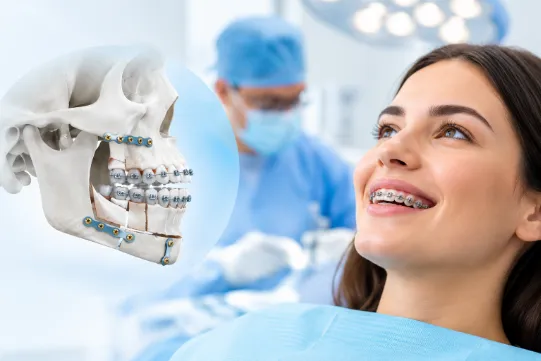
When Might Corrective Jaw Surgery Be Recommended?
Severe Underbite
The lower jaw or lower teeth are positioned significantly ahead of the upper jaw or teeth.
Significant Overjet or Recessed Lower Jaw
A substantial upper-to-lower jaw discrepancy may affect the bite and facial balance.
Skeletal Open Bite
The upper and lower teeth do not meet properly because of underlying jaw relationships.
Jaw Asymmetry
Uneven jaw growth or positioning may cause facial or bite asymmetry.
Vertical Jaw Discrepancies
Excessive or insufficient vertical jaw development may affect facial proportions and tooth display.
Complex Skeletal Crossbite
A significant difference in upper and lower jaw width or position may require combined treatment.
These findings do not automatically mean surgery is required. A detailed orthodontic and surgical evaluation is necessary.
What Problems Can Surgical Orthodontics Address?
Skeletal Class II Jaw Discrepancies
Selected cases involving a relatively retrusive lower jaw, protrusive upper jaw, or a combination.
Skeletal Class III Jaw Discrepancies
Selected cases involving a prominent lower jaw, retrusive upper jaw, or both.
Facial & Jaw Asymmetry
Uneven skeletal relationships contributing to facial imbalance and bite discrepancies.
Skeletal Open Bite
Jaw relationships that prevent appropriate contact between upper and lower teeth.
Transverse Jaw Discrepancies
Significant jaw width differences that may require surgical expansion or segmental correction.
Complex Bite & Facial Proportion Concerns
Coordinated tooth and jaw repositioning may improve occlusion and facial relationships.
Not all functional symptoms, facial concerns, or bite discrepancies can be resolved through surgery. Treatment goals and realistic expectations are discussed individually.
Your Surgical Orthodontic Treatment Journey
01 | Comprehensive Orthodontic Consultation
Evaluate bite, alignment, jaw relationships, facial proportions, and goals.
02 | Coordinated Surgical Evaluation
Referral to an oral and maxillofacial surgeon for detailed evaluation and planning.
03 | Pre-Surgical Orthodontic Treatment
Braces or selected aligner approaches position teeth appropriately within each jaw.
04 | Corrective Jaw Surgery
The surgeon performs the planned procedure; hospitalization and recovery vary.
05 | Post-Surgical Orthodontic Finishing
After sufficient healing, refine tooth positions and bite.
06 | Retainers & Long-Term Follow-Up
Retainers maintain alignment; surgical follow-up continues as recommended.
READY FOR A HEALTHIER, STRAIGHTER SMILE?
Why Do Teeth Sometimes Look Worse Before Jaw Surgery?
Before surgery, orthodontic treatment may temporarily make the bite discrepancy more noticeable. Dental decompensation positions teeth within their respective jaws so the surgeon can achieve the planned skeletal correction.
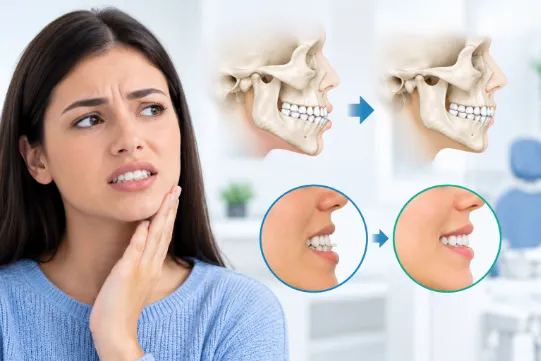
What Types of Corrective Jaw Surgery May Be Used?
Upper Jaw Surgery (Le Fort I Osteotomy)
Repositions the upper jaw to address selected front-to-back, vertical, transverse, or asymmetric discrepancies.
Lower Jaw Surgery (BSSO)
Repositions the lower jaw forward or backward for selected skeletal discrepancies.
Double Jaw Surgery
Combines upper and lower jaw repositioning when correction of both jaws is needed.
Segmental Jaw Surgery
Selected procedures reposition separate jaw segments to address complex relationships.
The surgeon determines the procedure through coordinated planning. Not every patient needs double jaw surgery.
How Long Does Surgical Orthodontic Treatment Take?
Surgical orthodontic treatment often takes approximately 18–30 months, although complex cases may require longer.
9–18 Months | Pre-Surgical Orthodontics
Tooth alignment and dental decompensation.
Variable | Surgery & Recovery
Timing depends on planning, scheduling, and healing.
3–9 Months | Post-Surgical Orthodontics
Bite refinement and orthodontic finishing.
Some patients may qualify for a surgery-first approach, but it is not appropriate for every case. The team will discuss sequence and timeline.
What Is Recovery Like After Jaw Surgery?
Recovery depends on the procedure, individual health, and surgical complexity. Swelling, bruising, temporary difficulty chewing, altered sensation, and fatigue may occur. The surgeon provides detailed instructions about diet, oral hygiene, medications, activity restrictions, and follow-up. Many patients return gradually to routine activities over several weeks; bone healing and sensory recovery can take longer.
Understanding Surgical Risks
Corrective jaw surgery involves risks such as infection, bleeding, altered or persistent numbness, healing complications, relapse, and anesthesia-related complications. Your surgeon will explain procedure-specific risks, benefits, and alternatives.

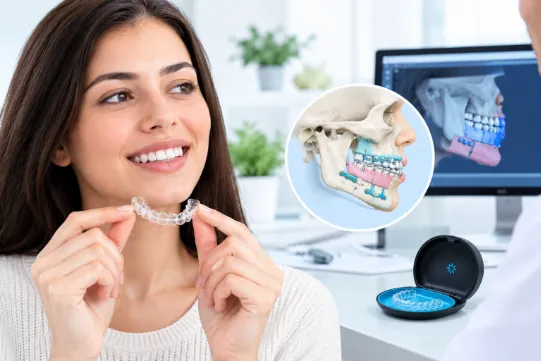
Can Invisalign® Be Used for Surgical Orthodontics?
In selected cases, Invisalign® or another clear aligner system may be used for portions of treatment. Traditional fixed braces are commonly preferred because they provide reliable tooth control and facilitate certain surgical stabilization techniques. Not every surgical case is suitable for aligners.
Is Jaw Surgery Necessary for Adults with an Underbite or Overbite?
Not always. Some adults can be treated through orthodontic camouflage, which adjusts tooth positions without changing jaw position.
For significant skeletal problems, camouflage may involve compromises in tooth inclination, facial appearance, or bite correction. Surgical orthodontics may be more appropriate when the goal requires repositioning the jaws.

How Much Does Surgical Orthodontic Treatment Cost?
Costs depend on complexity, duration, appliances, and insurance benefits. Treatment involves separate orthodontic, surgical, anesthesia, hospital, and sometimes imaging fees. Our team explains the orthodontic portion before treatment begins.
Flexible Monthly Payments
Available arrangements for the orthodontic portion of treatment.
Orthodontic Insurance Verification
Assistance reviewing dental insurance benefits.
CareCredit & Cherry
Financing options for eligible applicants, subject to approval and terms.
Transparent Orthodontic Estimates
Review orthodontic fees and payments before beginning.
Surgical, anesthesia, and hospital charges are determined separately by the respective providers and facilities.

Does Insurance Cover Surgical Orthodontics or Jaw Surgery?
Coverage depends on dental and medical insurance policies, diagnosis, exclusions, and medical necessity requirements. Dental insurance may contribute toward orthodontic care. Medical insurance may cover selected medically necessary orthognathic procedures, but coverage is not guaranteed and often requires prior authorization.
- Delta Dental: Coverage and participation subject to verification.
- MetLife: Coverage and participation subject to verification.
- Cigna: Coverage and participation subject to verification.
- Aetna: Coverage and participation subject to verification.
- GEHA: Coverage and participation subject to verification.
- Other Major PPO Plans: Coverage and participation subject to verification.
Our office can help verify orthodontic benefits; the surgeon’s office typically coordinates medical insurance authorization. Insurance acceptance does not guarantee in-network participation or coverage.
Why Choose Smile City Orthodontics for Surgical Orthodontics?
- American Board-Certified Orthodontist: Individualized orthodontic diagnosis and treatment planning by Dr. Jacob.
- Coordinated Specialist Care: Collaboration with oral and maxillofacial surgeons.
- Advanced Digital Planning: Digital scans and clinically appropriate 3D imaging.
- Comprehensive Treatment Approach: Planning considers tooth position and skeletal jaw relationships.
- Continuity of Orthodontic Care: The same owner-orthodontist before and after surgery.
- Transparent Financial Guidance: Orthodontic estimates, insurance assistance, and monthly payment options.


Surgical Orthodontics Near Mesquite, Forney & East Dallas
Smile City Orthodontics is located in Sunnyvale, TX, and welcomes patients from Mesquite, Forney, East Dallas, Garland, Seagoville, and surrounding communities.
If you have a significant underbite, overjet, open bite, jaw asymmetry, or another skeletal concern, Dr. Jacob can evaluate your orthodontic needs and discuss whether coordinated surgical treatment is appropriate.
Frequently Asked Questions About Surgical Orthodontics
1. What is surgical orthodontics?
Combined orthodontic tooth movement and corrective jaw surgery for selected skeletal discrepancies.
2. How do I know if I need jaw surgery?
An orthodontic evaluation and oral and maxillofacial surgeon consultation determine suitability.
3. Can braces fix a severe underbite without surgery?
Some cases allow camouflage; significant skeletal discrepancies may need surgery for full skeletal correction.
4. Can Invisalign® be used before jaw surgery?
Sometimes. Fixed braces may be preferred based on surgical requirements.
5. How long does surgical orthodontics take?
Often approximately 18–30 months, with variation for complexity, scheduling, and healing.
6. Will my bite look worse before surgery?
Sometimes, because pre-surgical dental decompensation can make the discrepancy more noticeable.
7. Is jaw surgery painful?
Discomfort, swelling, and altered sensation are common; the surgeon provides recovery and pain-management guidance.
8. How long is recovery after jaw surgery?
Initial recovery often takes several weeks; complete healing and sensory recovery may take longer.
9. Will jaw surgery change my facial appearance?
Jaw repositioning can change facial proportions and soft-tissue appearance; anticipated changes and limitations are reviewed.
10. Does medical insurance cover jaw surgery?
Some medically necessary procedures may be covered subject to policy terms and authorization.
11. Does dental insurance cover surgical orthodontics?
Some plans provide orthodontic benefits, subject to policy provisions and lifetime maximums.
12. Who performs the jaw surgery?
A qualified oral and maxillofacial surgeon; Dr. Jacob manages orthodontic treatment.
13. Will I need retainers after treatment?
Yes, to help maintain tooth alignment.
14. Can teenagers receive surgical orthodontic treatment?
Some can, but definitive jaw surgery generally considers remaining skeletal growth and the diagnosis.
Schedule Your Complimentary Surgical Orthodontic Consultation
A Comprehensive Approach to Complex Jaw & Bite Problems.
Meet Dr. George Jacob, BDS, MDS, MS, an American Board-Certified Orthodontist, for a personalized evaluation.
Sunnyvale, TX — Serving Mesquite, Forney, East Dallas & Surrounding Communities.