

Having trouble figuring out how to floss with braces in Sunnyvale, TX? You’re not alone! Managing your oral hygiene with brackets and wires can be tricky at the start. But with the right flossing tools and techniques, it gets much easier. Keep reading to learn how to make flossing quick, easy, and stress-free.

Why Flossing with Braces Is So Important
Braces help straighten your teeth, but they can make cleaning harder. Wires and brackets often trap food and plaque in small spaces. If not cleaned well, this buildup can turn into tartar and cause tooth decay or gum disease. Flossing is important because brushing alone can’t reach every spot. A steady flossing routine keeps your teeth clean and helps your braces work better.
The Best Tools to Improve Your Flossing Routine
The right tools can simplify the process of flossing with braces. Here are the most popular and effective options:
Floss Threaders
Floss threaders work like sewing needles to help you guide dental floss under your wires. These are particularly helpful for reaching between your teeth without damaging your braces. They are small, easy to use, and can save you time while cleaning. With a bit of practice, you’ll be able to floss your whole mouth with less effort.
Water Flossers and Oral Irrigators
Water flossers shoot water between your teeth and around brackets and wires. They’re great for people who struggle with string floss or have sensitive gums. The gentle water stream helps remove food and plaque without irritation.
Superfloss
Superfloss is pre-cut floss that combines stiff ends to help with threading and spongy sections for cleaning under wires. This tool is excellent for reaching tricky spots around brackets. It’s soft, easy to handle, and made for people with braces.
Interdental Brushes (Proxy Brushes)
An interdental or proxy brush is a small toothbrush designed to clean between teeth. This tool removes plaque buildup in spaces that floss may not reach easily. These brushes come in many sizes and fit comfortably between your brackets.
Floss Picks
Floss picks have a handle and a piece of pre-threaded floss, making it simple to clean tight areas between your teeth. Many people find these more comfortable and quicker to use compared to string floss. They’re easy to carry and perfect for cleaning on the go.
Where to Find These Flossing Tools
You can pick up flossing tools like water flossers, floss threaders, proxy brushes, or floss picks at local stores, online, or at your orthodontic clinic. Smile City Orthodontics in Sunnyvale, TX, also offers starter kits with everything you need to start good oral care at home.
Flossing with Braces: A Simple Step-by-Step Guide
Follow this guide for an effective flossing routine:
Step 1: Get Your Floss Ready
Take about 18 inches of dental floss. Use a floss threader to guide it under the wire before starting. According to Dr. Jared Gianquinto, a professional orthodontist in Bakersfield and Tehachapi, CA, using the right length of floss ensures you have enough to reach every tooth without reusing dirty sections.
Step 2: Floss Around Each Toothreusing
Wrap the floss around one tooth in a “C” shape. Gently slide the floss up and down along the gumline to clear out debris and plaque. Avoid pulling too hard to prevent gum irritation or damage to your brackets.
Step 3: Use a Water Flosser for Extra Cleaning
Complement your flossing routine by using a water flosser to target tricky areas like your back teeth, wires, or brackets. Adjust the pressure settings if your gums are sensitive.
Step 4: Brush Thoroughly
After flossing, brush your teeth using a soft-bristled toothbrush and fluoride toothpaste. Pay special attention to the spaces around wires and brackets. For added protection, rinse with fluoride mouthwash to fight against tooth decay and plaque buildup.
Adjusting Flossing Methods for Different Types of Braces
Each type of braces requires slightly different flossing techniques:
- Metal Braces: Spend extra time threading dental floss through the wires.
- Clear Braces: Be gentle to avoid breaking the delicate brackets.
- Lingual Braces: Since these braces are placed behind the teeth, use tools like a water flosser or proxy brush to reach the back surfaces.
- Self-Ligating Braces: These tend to have fewer parts, but your flossing routine should still be thorough.
How to Overcome Flossing Challenges
Flossing may feel awkward with braces, but practice and the right tools will help. Here are solutions to common challenges:
- Sensitive or Bleeding Gums: Flossing can irritate gums, especially if you’re new to it. Rinse with warm saltwater to ease discomfort. Gentle flossing over time also strengthens your gums.
- Hard-to-Reach Areas: Use tools like a proxy brush, interdental brushes, or a water flosser to clean narrow spaces and back teeth effectively.
- Frustration with String Floss: If threading string floss feels too slow, try pre-threaded floss picks. These tools speed up the process and make it less frustrating.
Post-Braces Oral Hygiene Routine
After your braces are off, continuing good dental hygiene habits is important to preserve your new smile:
- Retainer Cleaning: Rinse and brush your retainer regularly to prevent plaque accumulation.
- Daily Flossing: Keep flossing every day to maintain healthy gums and teeth.
- Brushing Techniques: Brush twice a day for at least two minutes using fluoride toothpaste.
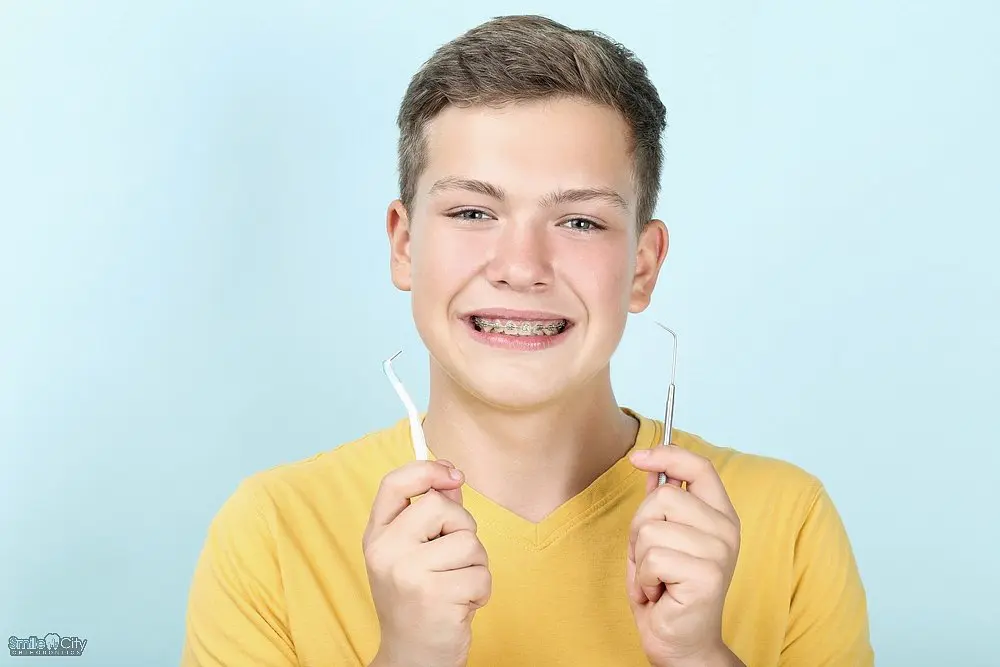
Why Smile City Orthodontics Recommends Proper Flossing
At Smile City Orthodontics, we believe that proper oral hygiene practices are key to achieving the smile you’ve always wanted. Our team provides:
- Personalized Flossing Tips: Learn how to floss effectively based on your specific braces type.
- Starter Kits: Receive tools like floss threaders, water flossers, and proxy brushes to simplify your daily routine.
- Expert Help: Our team can guide you with gum care, plaque control, and ways to prevent tooth decay.
Start Your Flossing Routine Now
Flossing with braces doesn’t have to be a challenge. The right flossing tools and methods can simplify your routine and make a big difference in your dental health. If you’re struggling to keep your teeth clean, Smile City Orthodontics is here to help. Contact our office in Sunnyvale, TX, for personalized advice and the tools you need to keep your smile healthy.
About The Authors
Dr. Jeryn Jacob – Orthodontist in Sunnyvale, TX
Dr. Jared Gianquinto – Orthodontist in Bakersfield and Tehachapi, CA
Frequently Asked Questions
Why is it so hard to floss with braces?
Flossing with braces can feel tough because the wires and brackets get in the way. It’s harder to guide the floss between your teeth, and you have to be extra careful not to snag it or pull on the braces. It can take more time and patience, especially when reaching the back teeth. But with practice and tools like floss threaders or small brushes, it gets easier. A little extra effort now will help keep your smile healthy and bright.
Is it OK to not floss with braces?
Skipping flossing with braces might seem tempting, but it’s not a good idea. Braces can trap food and plaque, which can lead to cavities, stains, or gum problems. Flossing helps keep your mouth clean and healthy during treatment. Even if it feels like a hassle at first, it gets easier with time and the right tools.
How can I tell if I’m flossing correctly?
You’re likely flossing right if you feel gentle resistance as the floss slides between your teeth. Wrap the floss in a C-shape around each tooth and move it up and down, not side to side. A little squeaky sound means your teeth are getting clean. Don’t skip the back teeth, and be gentle to avoid bleeding gums. With regular practice, flossing will feel quicker and easier.